
Bandra / Khar West
Ghatkopar West / R City Mall
Thane West / Hiranandani Estate
Thane / Majiwada / Lodha Paradise
Thane West / Chestnut Plaza
Navi Mumbai / Kokilaben DAKC
Andheri East / Apollo Chakala
Andheri West / DLH Plaza
Bandra / Khar West
Ghatkopar West / R City Mall
Thane West / Hiranandani Estate
Thane / Majiwada / Lodha Paradise
Thane West / Chestnut Plaza
Navi Mumbai / Kokilaben DAKC
Andheri East / Apollo Chakala
Andheri West / DLH Plaza
Mumbai Dental Care
What Makes a Dental Clinic Stand Out? Choosing a Dentist in Mumbai
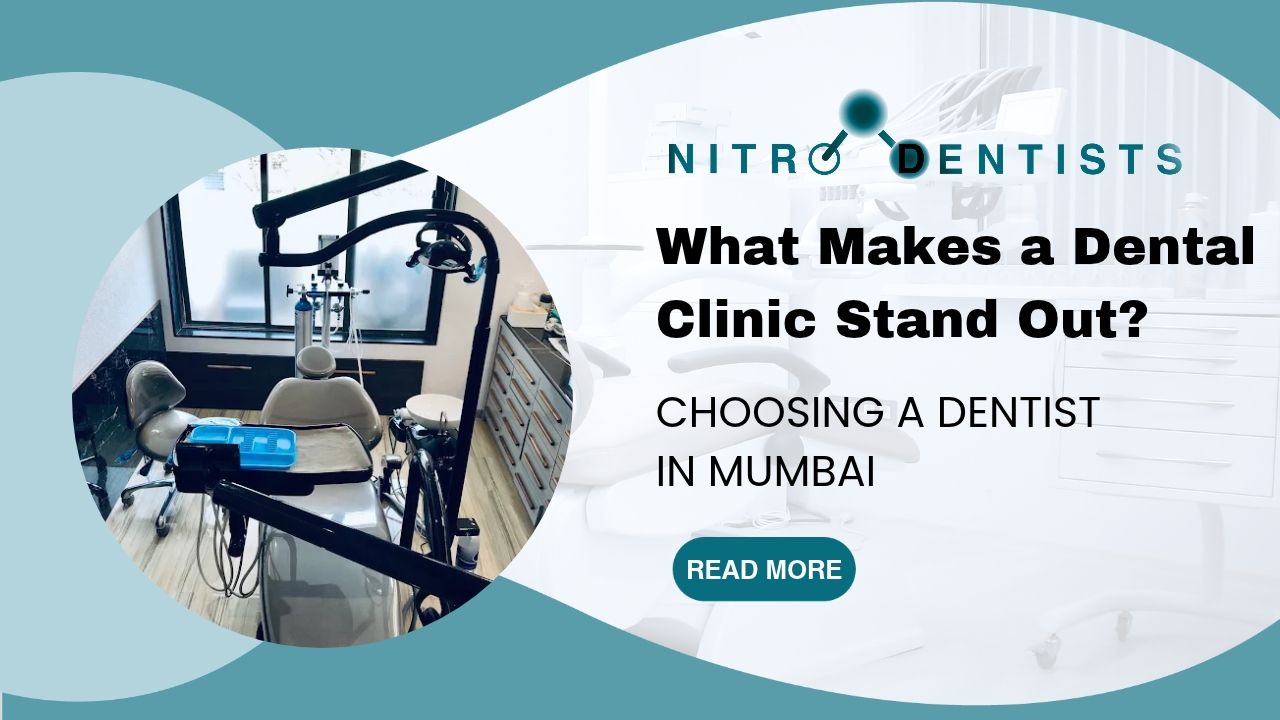
Navigating Dental Care in India’s Financial Capital: A Patient-First Clinical Framework
Mumbai is a vibrant metropolis where modern medical infrastructure exists alongside rapid urban life. From established neighborhoods in South Mumbai to busy commercial and residential areas across Bandra West, Khar, Andheri, Powai, Chembur, Ghatkopar, and expanding suburbs in Thane and Navi Mumbai, residents are presented with a wide selection of dental practices. When facing a sudden toothache, exploring orthodontic alignment, or planning restorative dental work, patients often wonder what makes a dental clinic stand out when choosing a dentist in Mumbai. Selecting the right clinic involves looking beyond ratings and storefront signage to evaluate the clinical standards inside the operatory.
Quality dental care relies on verifiable clinical capabilities. Key factors that distinguish a modern dental practice include postgraduate Master of Dental Surgery (MDS) specialist qualifications when needed, appropriate diagnostic imaging tailored to clinical necessity, validated instrument sterilization with documented monitoring, structured anxiety management through Nitrous Oxide conscious sedation for suitable candidates, and transparent, itemized treatment planning. Whether you need a root canal treatment, dental implants, clear aligners, or aesthetic smile designing, this guide outlines the clinical benchmarks, technological tools, and ethical standards that help patients choose quality dental care in Mumbai.
Clinical Evaluation Criteria
6 Clinical Factors to Consider When Choosing a Dental Clinic in Mumbai
Essential clinical benchmarks that help patients evaluate dental practices across Mumbai and Thane.
Multi-Disciplinary MDS Care
Care provided or overseen by Master of Dental Surgery (MDS) specialists in Endodontics, Oral & Maxillofacial Surgery, Prosthodontics, and Orthodontics for complex dental conditions requiring advanced training.
Appropriate Diagnostic Imaging
Conventional dental X-rays serve routine diagnostics, while 3D CBCT imaging may provide additional diagnostic information for selected implant and endodontic cases when conventional imaging does not fully resolve the clinical question.
Anxiety Management & Sedation
Nitrous oxide and oxygen may help suitable patients manage dental anxiety. A trained clinician assesses suitability, provides continuous chairside monitoring, and follows proper recovery protocols.
Sterilization & Monitoring
Ask how reusable instruments are cleaned, packaged, sterilized, and monitored. Appropriate sterilization equipment, sealed pouches opened chairside, and regular biological spore testing protect patient safety.
Transparent Itemized Estimates
Written treatment plans detailing procedures, materials, and associated costs before treatment begins, helping patients make informed decisions without unexpected additions.
Accessible Multi-Location Care
Conveniently located clinical hubs across Bandra, Powai, Chembur, Ghatkopar, Khar, Andheri, and Thane with convenient access to metro lines, railway stations, and express routes.
Specialized Clinical Services
Comprehensive Multi-Specialty Dental Services in Mumbai
A modern dental practice provides a broad spectrum of preventative, restorative, cosmetic, and surgical treatments delivered by qualified specialists.
Root Canal & Endodontics
Rotary nickel-titanium instrumentation, electronic apex locator depth verification, and sterile rubber dam isolation performed by Endodontists to clean, disinfect, and seal infected pulp spaces.
Explore Root Canal TreatmentDental Implants & Surgery
Biocompatible grade-4 and grade-5 titanium and zirconia implants planned via 3D CBCT volumetric scans, bone augmentation, sinus lifts, and careful wisdom tooth extractions by Maxillofacial Surgeons.
Explore Dental ImplantsClear Aligners & Braces
Digitally planned clear aligners, self-ligating brackets, and ceramic braces planned by MDS Orthodontists to address tooth crowding, spacing, and bite relationships.
Explore Clear Aligners & BracesSmile Designing & Veneers
Aesthetic smile evaluations incorporating ceramic veneers, composite restorations, and gingival contouring planned in accordance with individual facial proportions.
Explore Smile DesigningProfessional Teeth Whitening
Clinically monitored in-office bleaching systems featuring light-cured gingival barrier protection and remineralizing desensitizers to safely lift extrinsic enamel stains.
Explore Teeth WhiteningNitrous Oxide Sedation Care
Inhalation conscious sedation utilizing calibrated medical laughing gas for children and adults experiencing dental anxiety, facilitating treatment in a relaxed state.
Explore Sedation DentistryClinical Quality & Specialist Standards
Specialty procedures at Nitro Dentists are conducted or overseen by credentialed Master of Dental Surgery (MDS) doctors adhering to established clinical guidelines and sterilization protocols.
Clinical Qualifications
The MDS Specialist Difference: Why Multi-Disciplinary Care Matters
In India, dental education begins with a 5-year Bachelor of Dental Surgery (BDS) degree, providing training in routine general dentistry such as diagnostic exams, preventive cleanings, and standard restorations. However, managing complex cases—such as severely curved or calcified root canals, bone augmentation for dental implants, or skeletal malocclusions—often benefits from the focused training of a Master of Dental Surgery (MDS) specialist.
01
Conservative Dentistry & Endodontics (Root Canal Specialists)
Endodontists complete 3 years of postgraduate training focused on the dental pulp and periapical tissues. Utilizing dental operating magnification, ultrasonic debridement tips, and rotary instrumentation, they locate complex root canals (such as the MB2 canal in maxillary molars) and manage curved or narrow roots that require specialized protocols. Learn more in our guide on root canal treatment.
02
Oral & Maxillofacial Surgery (Surgical Interventions)
Maxillofacial surgeons complete hospital-based surgical residencies encompassing extractions of deeply impacted wisdom teeth, bone grafting procedures, sinus augmentations, and facial trauma management. Their detailed anatomical training helps reduce procedural risks and supports smooth healing.
03
Prosthodontics & Implantology (Restorative Care)
Prosthodontists are dental specialists dedicated to restoring and replacing missing or damaged teeth. They focus on complex occlusal rehabilitation, implant-supported prostheses, biocompatible zirconia crowns, and bite balancing to promote long-term restoration stability. Learn more about dental implants in Mumbai.
04
Orthodontics & Dentofacial Orthopaedics (Tooth Alignment)
Orthodontists specialize in tooth movement biomechanics and jaw alignment. Rather than only addressing visible crowding, an Orthodontist assesses functional occlusion between the upper and lower arches, ensuring clear aligners or braces establish a balanced bite.
Clinical Perspective on Multi-Disciplinary Care
Depending on the clinic, complex cases may be managed by a general dentist, a visiting specialist, or a multidisciplinary team. Ask who will perform your treatment and what relevant qualifications they hold. While general dentists capably handle preventative and routine restorative care, complex treatments—such as surgical extractions, curved root canals, or full-arch rehabilitation—often benefit from multidisciplinary collaboration and clinicians with postgraduate (MDS) training in those specific disciplines.
Collaborative specialist evaluation helps prioritize tooth preservation and appropriate treatment planning.
Complex procedures are performed by clinicians with dedicated postgraduate clinical training in that discipline.
Challenging anatomical variations and unexpected findings are addressed with specialized clinical resources.
Diagnostic Technology & Imaging
Diagnostic Precision: Evidence-Based Imaging, Digital Scanners & Electronic Apex Locators
Accurate diagnosis is fundamental to effective dental treatment. Conventional two-dimensional intraoral periapical radiographs (IOPA) and panoramic views (OPG) remain the primary imaging modality for routine dental examinations and treatment planning, and conventional dental X-rays are often entirely sufficient. However, for selected complex clinical presentations, additional diagnostic technology can assist clinicians in answering specific questions that conventional imaging cannot fully resolve.
01
Cone Beam Computed Tomography (CBCT) for Selected Cases
CBCT imaging may provide additional diagnostic information for selected implant and endodontic cases when conventional imaging does not adequately answer the clinical question. In accordance with American Dental Association (ADA) recommendations on dental radiographic examinations, imaging decisions must be individualized: CBCT is not a universal requirement and should only be prescribed when the anticipated diagnostic benefit justifies radiation exposure. When clinically indicated, volumetric imaging assists clinicians in assessing bone dimensions, nerve proximity, and complex canal morphology.
02
Intraoral Digital Scanners
Modern digital practices frequently utilize optical intraoral scanners rather than conventional putty impression pastes. These devices capture real-time 3D optical images of the dental arches, generating accurate digital models for clear aligners, ceramic veneers, and laboratory-fabricated crowns without patient gagging.
03
Electronic Apex Locators
During root canal therapy, electronic apex locators assist clinicians by electronically measuring impedance variations across the canal and apical foramen. This supports precise working length determination, reducing the likelihood of under-filling or over-extension.
04
Intraoral Cameras for Visual Clarity
Chairside intraoral cameras project magnified images onto operatory monitors, allowing patients to directly view tooth decay, defective restorations, and plaque accumulation, facilitating clear and open treatment discussions.
Clinical Indications & Individualized Imaging Decisions
While conventional 2D radiographs remain sufficient for most standard dental evaluations, complex anatomical scenarios—such as assessing root curvature adjacent to major nerve canals or investigating persistent symptoms in multi-rooted teeth—may warrant targeted 3D imaging. Clinical endodontic literature notes that maxillary molars often possess a secondary mesiobuccal canal (MB2) that can be difficult to detect on conventional two-dimensional radiographs. When conventional imaging is inconclusive, targeted CBCT imaging and clinical magnification help specialists evaluate complex anatomy carefully while keeping radiation exposure as low as reasonably achievable (ALARA).
Cross-sectional volumetric slicing assists in assessing root curvature, internal anatomy, and periapical bone changes.
Pre-surgical digital planning allows measurement of bone height and width prior to implant placement.
Digital intraoral scans enhance patient comfort and streamline communication with dental laboratories.
Patient Comfort & Anxiety Relief
Anxiety Management in Dental Practice: Nitrous Oxide Conscious Sedation
Dental apprehension affects many patients in Mumbai, sometimes causing individuals to delay necessary checkups until preventable decay develops into acute pain. While local anesthetics reliably numb procedural sensations, they do not resolve situational tension or sensitive gag reflexes. For suitable candidates, modern dental practices provide Nitrous Oxide conscious sedation as a gentle adjunct to dental treatment.
01
The "Pehle Calm, Phir Kaam" Approach
At Nitro Dentists, clinical care emphasizes that patient comfort should be established before procedures begin. Nitrous Oxide inhalation gently eases situational nervousness, promoting a calm and relaxed state during treatment.
02
Conscious Sedation vs. General Anesthesia
Nitrous oxide provides conscious sedation, meaning the patient remains awake, responsive, able to swallow naturally, and capable of talking with the dental team. For an educational overview, read our patient guide on does nitrous oxide put you to sleep?
03
Assessing Patient Suitability & Clinical Context
Nitrous oxide and oxygen may help suitable patients manage dental anxiety. A trained clinician should assess suitability, monitor the patient, and follow appropriate recovery and discharge protocols. Suitability depends on a thorough evaluation of the patient's comprehensive medical history, ability to breathe comfortably through the nose, anxiety levels, and the specific procedure being planned.
04
Supervised Recovery & Individualized Protocols
Following the procedure, administration of 100% oxygen aids in eliminating residual nitrous oxide. Because physiological response, procedure length, and anxiety levels differ, recovery time can vary between individuals. Clinicians follow structured recovery criteria to confirm the patient has returned to baseline before discharge. For an educational overview, see our clinical guide on how long recovery takes after laughing gas.
Clinical Safety Measures for Conscious Sedation
Patient safety during conscious sedation requires standardized protocols in accordance with clinical guidelines. Careful practices maintain pre-sedation medical assessment, continuous chairside observation and vital sign monitoring, equipment with fail-safe oxygen delivery limits, and practitioners trained in sedation management.
Pre-treatment medical screening evaluates respiratory status, nasal patency, and general health history.
Vital signs including oxygen saturation (SpO2) and pulse rate are monitored chairside during treatment.
A standardized 100% oxygen flush and clinical assessment ensure patients meet discharge criteria prior to dismissal.
Infection Control & Instrument Sterilization
Infection Control Protocols: Validated Instrument Cleaning, Sterilization & Monitoring
Rigorous infection control is foundational to patient safety in dental healthcare. Rather than relying on any single equipment label, reliable patient safety depends on a complete reprocessing workflow: thorough pre-cleaning, validated sterilization cycles matching instrument types, appropriate packaging, and documented routine monitoring. Ask how reusable instruments are cleaned, packaged, sterilized, and monitored. Appropriate sterilization equipment and validated cycles should match the instruments being processed and the manufacturer's instructions.
01
Pre-Cleaning & Validated Sterilization Cycles
Sterilization success begins with thorough mechanical or ultrasonic pre-cleaning to remove bioburden before heat processing. Equipment and cycle parameters (steam under pressure, dry heat, or vacuum cycles) must match the manufacturer’s instructions for specific instruments. For hollow instruments such as rotary handpieces, pre-vacuum autoclaves (such as Class-B systems) can assist steam penetration through narrow internal lumens.
02
Protective Packaging & Chemical Indicators
Following ultrasonic cleaning and drying, instruments are packaged in medical-grade sterilization pouches or wraps to maintain sterility until the moment of use. Internal and external chemical indicators provide visual confirmation that critical cycle parameters (temperature, time, and steam) were reached, remaining sealed until opened chairside.
03
Mechanical, Chemical & Weekly Biological Spore Monitoring
Centers for Disease Control and Prevention (CDC) guidance emphasizes a multi-tiered quality assurance program: mechanical monitoring of cycle gauges, chemical indicators on each pack, and at least weekly biological indicator testing (using resistant Geobacillus stearothermophilus spores). Routine biological spore tests provide objective, documented verification that sterilizer cycles achieve complete microbial inactivation.
04
Waterline Sanitization & Surface Barriers
Dental chair waterlines are fitted with anti-retraction valves and treated to prevent biofilm accumulation. Operatory touch surfaces (handles, switches, delivery trays) are sanitized with hospital-grade wipes between patients and covered with fresh disposable protective barriers.
Patient Infection Control Verification Checklist
Patients are encouraged to ask about infection control practices. Here is a helpful 3-step checklist to evaluate clinic hygiene during your consultation:
Packaging & Chairside Opening: Confirm that reusable instruments are stored in intact, sealed sterilization pouches and opened in your presence.
Reprocessing & Monitoring: Ask how reusable instruments are cleaned, packaged, sterilized, and monitored, including the practice's routine biological spore testing schedule.
Single-Use Items: Check that disposable items—such as suction tips, saliva ejectors, and local anesthesia needles—are opened fresh and discarded safely after treatment.
Patient Decision Guide
Questions to Ask When Choosing a Dental Clinic
Choosing a dental clinic involves considering clinical expertise, diagnostic facilities, infection-control practices, patient comfort, and treatment costs. The following questions can help you make an informed decision.
| What to Check | Questions to Ask |
|---|---|
| Dentist Qualifications | What are the dentist’s qualifications and experience relevant to my treatment? |
| Diagnostic Facilities | What diagnostic tests or imaging may be required for my condition? |
| Sterilization and Infection Control | What sterilization procedures are followed for reusable dental instruments? |
| Patient Comfort | What options are available to help manage dental anxiety or discomfort? |
| Treatment Plan | What are the recommended treatment options, benefits, risks, and alternatives? |
| Cost Transparency | Can I receive a written estimate covering the proposed treatment and any anticipated additional costs? |
| Follow-up Care | What follow-up appointments or aftercare instructions may be needed? |
Dentist Qualifications
What are the dentist’s qualifications and experience relevant to my treatment?
Diagnostic Facilities
What diagnostic tests or imaging may be required for my condition?
Sterilization and Infection Control
What sterilization procedures are followed for reusable dental instruments?
Patient Comfort
What options are available to help manage dental anxiety or discomfort?
Treatment Plan
What are the recommended treatment options, benefits, risks, and alternatives?
Cost Transparency
Can I receive a written estimate covering the proposed treatment and any anticipated additional costs?
Follow-up Care
What follow-up appointments or aftercare instructions may be needed?
Asking these questions can help you understand the proposed treatment, discuss your concerns with the dental team, and make a decision based on your individual needs.
Ethics & Treatment Clarity
Transparent Treatment Planning: Avoiding Overtreatment & Warranty Myths
Choosing a dental practice in Mumbai requires assessing communication and ethics as well as clinical technology. Patients may encounter practices that vary widely in pricing clarity, emphasizing the importance of transparent consultation practices.
01
Itemized Written Estimates Before Care Commences
A reliable practice provides a clear clinical evaluation with itemized cost estimates before treatment starts. Patients should receive transparent information distinguishing procedural fees, material grades (such as titanium grades or ceramic brands), and follow-up expectations.
02
Conservative Tooth Preservation
Ethical dental care prioritizes minimally invasive techniques whenever feasible. Natural tooth structure is preserved whenever possible through conservative composite restorations, inlays, or preventive therapies rather than premature crowning or unneeded root canals.
03
Understanding Material Longevity vs. "Lifetime Warranty" Claims
Advertisements occasionally claim "Lifetime Warranties" on dental restorations. Biologically, dental restorations exist within a living oral environment subject to bite forces, oral hygiene, and periodontal changes. While high-grade implant fixtures and zirconia crowns possess high mechanical strength, clinical longevity depends on bone health, daily hygiene, and regular checkups. Reputable practices provide genuine manufacturer material certificates rather than unconditional commercial promises.
04
Material Authenticity & Traceability
Responsible practices provide official product documentation containing lot numbers and manufacturer details for implant fixtures and ceramic crowns, confirming that verified medical-grade components were used.
Factors That Influence Dental Treatment Costs
Dental treatment fees in Mumbai reflect several clinical factors: the complexity of your procedure, instrument sterilization and infection control protocols, the clinician’s postgraduate qualifications and experience, required diagnostic imaging, and certified restorative materials. Prioritize verified infection control, clinical qualifications, and treatment transparency when making dental care decisions.
Mumbai Dental Care Network
Accessible Specialist Clinics Across Mumbai & Thane
Nitro Dentists provides multi-specialty dental care across prime locations in Mumbai and Thane, making specialist consultations conveniently accessible.
Bandra & Khar West Hub
Address: 201, 2nd Floor, Makhija Royale, S.V. Road, Above Noble Plus, Bandra West, Mumbai - 400052
Serving Bandra West, Bandra East, Khar, Santacruz, and Linking Road with smile designing, dental implants, and conscious sedation options. Learn more at our Bandra clinic guide and Khar dental care.
Powai (Hiranandani Gardens)
Address: 7th Floor, Unit 701-702, El Tara Building, Hiranandani Gardens, Powai, Mumbai - 400076
Modern dental facility serving Powai, Chandivali, Vikhroli, Kanjurmarg, and JVLR with multi-specialty root canals, clear aligners, and gentle dental care. Explore our dedicated Powai dental clinic page.
Chembur & Eastern Suburbs
Address: 201-202, B-Wing, Raikar Chambers, Govandi Station Rd, Chembur East, Mumbai - 400088
Conveniently situated 2 minutes from Govandi Station and 5 minutes from Eastern Freeway, serving Chembur, Deonar, Tilak Nagar, and Diamond Garden. Visit our Chembur dental center.
Ghatkopar West (LBS Marg)
Address: 403, 4th Floor, Presidential Plaza, LBS Marg, Opposite R City Mall, Ghatkopar West - 400086
Directly across from R City Mall along the LBS Marg corridor, serving Ghatkopar West, Vidyavihar, Amrut Nagar, and Pant Nagar. Explore our Ghatkopar clinic guide.
Andheri East & West
Locations: DLH Plaza, SV Road, Andheri West & Apollo Clinic, Chakala, Andheri East
Prime Western Suburbs access connected by Mumbai Metro Lines 1, 2A & 7. Comprehensive restorative and surgical care across both East and West. See our Andheri clinic guide.
Thane (Majiwada & Hiranandani)
Locations: Lodha Paradise, Majiwada & Hamilton Tower, Hiranandani Estate, Thane West
Serving Thane City, Ghodbunder Road, Majiwada, and Mulund with multi-specialty dental care and Nitrous Oxide sedation options. Explore our Thane dental clinics.
Frequently Asked Questions
Answers to Common Questions on Choosing a Dental Clinic in Mumbai
Medically grounded, practical answers to help you navigate dental choices across the city with confidence.
When evaluating dental clinics in Mumbai, important clinical factors include: dentist qualifications and multidisciplinary specialist care for complex procedures, appropriate diagnostic imaging tailored to clinical necessity, verified instrument sterilization with documented monitoring, anxiety management options such as nitrous oxide sedation for suitable candidates, and transparent, itemized treatment planning.
While a BDS graduate provides routine restorations and general oral health maintenance, an MDS specialist completes three additional years of post-graduate residency in a focused branch—such as Endodontics for complex curved root canals, Oral & Maxillofacial Surgery for impacted wisdom teeth, Prosthodontics for full-mouth rehabilitation, or Orthodontics for aligners. This dedicated residency equips clinicians with specialized training to manage complex clinical anatomy and potential procedural challenges.
Nitrous oxide and oxygen may help suitable patients manage dental anxiety and sensitive gag reflexes while remaining conscious, responsive, and able to communicate. Suitability depends on the patient's comprehensive medical history, ability to breathe comfortably through the nose, and specific clinical circumstances. A trained clinician assesses suitability, provides continuous chairside monitoring, and follows structured recovery and discharge protocols.
Ask how reusable instruments are cleaned, packaged, sterilized, and monitored. Appropriate sterilization equipment and validated cycles should match the instruments being processed and the manufacturer's instructions. In line with CDC guidance, clinics should maintain mechanical and chemical cycle monitoring, package instruments in sealed pouches opened chairside, and conduct at least weekly biological spore testing to objectively verify sterilization efficacy.
Conventional dental X-rays remain sufficient for most routine dental evaluations. However, CBCT imaging may provide additional diagnostic information for selected implant and endodontic cases when conventional imaging does not adequately answer the clinical question. In accordance with American Dental Association (ADA) recommendations, CBCT is prescribed only when the expected diagnostic benefit justifies radiation exposure, providing volumetric views to evaluate bone dimensions, nerve proximity, and complex canal anatomy.
Dental treatment fees in Mumbai vary based on procedure complexity, the specific materials used (such as certified titanium implant systems or layered zirconia crowns), diagnostic imaging requirements, and specialist involvement. Reputable practices provide written itemized estimates following a clinical examination.
Helpful questions include: 1) Which specialist will be performing or overseeing my procedure? 2) What diagnostic imaging is recommended to evaluate my condition? 3) What sterilization protocols are in place for instruments and handpieces? 4) What comfort or sedation options are available if I feel anxious? 5) Can I review an itemized estimate before treatment begins?
Nitro Dentists operates multi-specialty dental centers across Mumbai and Thane, including Bandra West (SV Road), Powai (Hiranandani Gardens), Chembur (Raikar Chambers, Govandi), Ghatkopar West (Presidential Plaza opposite R City Mall), Khar West, Andheri (SV Road and Chakala), and Thane (Hiranandani Estate and Majiwada), open Monday through Sunday. Call +91 97696 52122 to book a consultation.
Looking for a Comprehensive Dental Consultation in Mumbai?
Schedule your consultation at Nitro Dentists. Consult with qualified MDS dental specialists, discuss appropriate diagnostic imaging and verified infection control protocols, and explore comfort options tailored to your clinical needs across Mumbai and Thane.