
Bandra / Khar West
Ghatkopar West / R City Mall
Thane West / Hiranandani Estate
Thane / Majiwada / Lodha Paradise
Thane West / Chestnut Plaza
Navi Mumbai / Kokilaben DAKC
Bandra / Khar West
Ghatkopar West / R City Mall
Thane West / Hiranandani Estate
Thane / Majiwada / Lodha Paradise
Thane West / Chestnut Plaza
Navi Mumbai / Kokilaben DAKC
Chembur Cosmetic Dentistry Guide
Teeth Whitening in Chembur: Benefits, Procedure and Expected Results
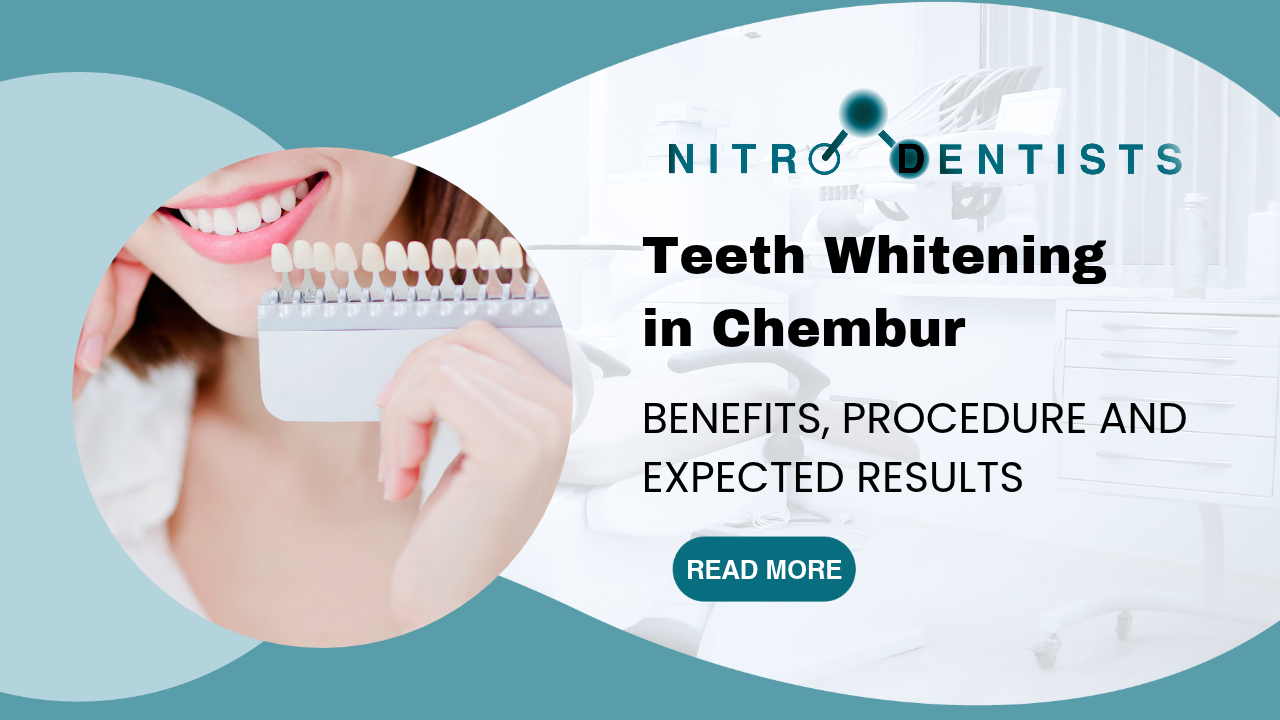
A Patient-First Guide to Clinically Supervised Teeth Whitening in Chembur
Chembur is one of Central Mumbai’s most active residential and business districts. Encompassing diverse neighborhoods like Diamond Garden, Chembur Naka, RC Marg, Deonar, Sindhi Society, Tilak Nagar, Pestom Sagar, and the Govandi Station Road hub around Raikar Chambers, the locality is home to working professionals, families, students, and long-standing residents. Whether preparing for an important family occasion, a professional milestone, or seeking to address gradual tooth discoloration, many patients look into teeth whitening in Chembur as a cosmetic option to enhance smile aesthetics.
However, teeth whitening is a clinical procedure governed by individual dental health, enamel thickness, and stain etiology. Over-the-counter whitening strips, abrasive charcoal powders, and unregulated salon treatments can lead to patchy discoloration, chemical gum irritation, or avoidable enamel wear. At Nitro Dentists Chembur, our approach to teeth whitening in Chembur prioritizes patient safety, incorporating thorough pre-treatment oral checks, gingival barrier protection, calibrated formulations, and optional Nitrous Oxide conscious sedation for eligible patients with pronounced dental anxiety. For complete details on our local practice, visit our dental clinic in Chembur. This clinical guide outlines the mechanisms behind tooth staining, step-by-step procedure stages, realistic expectations, practical aftercare precautions, and available services at our Chembur center.
Treatment Considerations
6 Essential Facts About Professional Teeth Whitening in Chembur
Key clinical factors that differentiate professionally supervised whitening from unregulated over-the-counter options.
Controlled Peroxide Chemistry
Professionally formulated hydrogen or carbamide peroxide gels break down organic chromophores within enamel prisms, designed to minimize structural risk when applied under clinical supervision.
Gingival Barrier Protection
A light-cured resin barrier is placed along the gumline to protect delicate soft tissues, significantly reducing the likelihood of chemical irritation during the whitening session.
In-Office Clinical Options
Noticeable brightening can often be achieved during a single appointment, though the exact extent of shade change varies depending on baseline color, stain origin, and chosen protocol.
In-Office & At-Home Regimens
Patients may choose in-office treatment, custom laboratory-fabricated take-home trays with lower-concentration gels, or a combination approach depending on clinical suitability and lifestyle.
Sensitivity Precautions
While transient sensitivity or slight gum tingling may occur, desensitizing agents containing potassium nitrate and topical fluoride varnish are utilized to support patient comfort.
Accessible Chembur Location
Located at Raikar Chambers on Govandi Station Road, a 2-minute walk from Govandi Station and 5 minutes from Eastern Freeway, open 7 days a week (11:00 AM – 9:00 PM).
Chembur Clinical Care
Comprehensive Dental Services at Nitro Dentists Chembur
Beyond professional teeth whitening, our Chembur clinic at Raikar Chambers provides a full spectrum of restorative, cosmetic, and general dental care supported by digital imaging, hospital-grade sterilization, and conscious sedation options.
Teeth Whitening
Clinically supervised in-office bleaching and custom take-home whitening options designed to address extrinsic stains from food, tea, and coffee while protecting gingival health.
Explore Whitening in ChemburDigital Smile Designing
Aesthetic smile rehabilitation planning incorporating ceramic veneers, aesthetic composite bonding, and gingival recontouring tailored to your facial proportions.
Explore Smile DesigningDental Implants
Titanium and zirconia tooth replacement solutions for single or multiple missing teeth, utilizing 3D CBCT diagnostic planning to assess bone architecture accurately.
Explore Dental ImplantsRoot Canal Treatment
Rotary endodontics, electronic apex locator measurements, and sterile rubber dam isolation to clean, disinfect, and seal infected root canal spaces comfortably.
Explore Root Canal in ChemburClear Aligners & Braces
Digitally planned transparent aligners and ceramic bracket systems to correct tooth crowding, spacing, and malocclusion, supporting easier long-term oral hygiene.
Explore Aligners in ChemburCleaning & Sedation Care
Ultrasonic scaling and stain prophylaxis to remove plaque biofilm, alongside Nitrous Oxide conscious sedation options for eligible patients requiring anxiety management.
Explore Cleaning & SedationClinical Quality & Infection Control Standards
All procedures at our Chembur practice follow standardized clinical protocols, multi-step instrument pre-cleaning, sealed indicator pouch packaging, and hospital-grade Class-B autoclave sterilization cycles.
Clinical Science of Tooth Staining
Why Do Teeth Discolor? Extrinsic vs. Intrinsic Mechanisms
Tooth discoloration involves interactions between lifestyle, dietary pigments, tooth anatomy, and natural aging. Understanding whether stains are superficial or deep helps determine which clinical approach is appropriate:
01
Extrinsic Stains (Surface Chromophore Accumulation)
Extrinsic stains occur when organic pigment compounds (chromophores) adhere to the acquired dental pellicle and outer enamel prisms. In Chembur and across Mumbai, frequent consumption of cutting chai, South Indian filter coffee, turmeric-heavy foods, red wine, paan, and smoking are common contributors. Because these stains reside in superficial enamel, they generally respond well to professional teeth whitening preceded by thorough ultrasonic scaling and polishing.
02
Intrinsic Discoloration (Dentin-Level Staining)
Intrinsic discoloration resides deeper within the dentin matrix. Contributing factors include systemic antibiotic exposure (such as tetracycline during tooth formation), excessive childhood fluoride intake (fluorosis), internal dental trauma resulting in pulp necrosis, or past endodontic treatments. Because bleaching gels penetrate dentin more gradually, intrinsic stains often require extended clinical regimens or companion aesthetic restorations like porcelain veneers or zirconia crowns.
03
Age-Related Enamel Thinning
Over decades of functional use, outer enamel naturally experiences gradual physiological thinning from mastication and dietary acid exposure. At the same time, the secondary dentin layer thickens and deepens in hue. As the thinner enamel becomes more translucent, the underlying warmer dentin reflects through more noticeably, leading to an overall yellower appearance.
04
Micro-Cracks & Pre-Existing Restorations
Microscopic enamel craze lines can gradually trap pigments over time. Additionally, aging composite resin restorations or old amalgam fillings can display marginal staining or cast a dark shadow through surrounding translucent enamel, which whitening gels cannot resolve.
Clinical Perspective on Abrasive DIY Scrubs
Home remedies such as activated charcoal powders, baking soda pastes, or lemon juice scrubs often claim to whiten teeth quickly. However, these methods rely primarily on mechanical abrasion or acidic erosion. While they may strip away surface biofilm, they can wear down protective enamel prisms and expose underlying dentin, which may increase long-term tooth sensitivity and make teeth more prone to rapid restaining. In contrast, professionally supervised whitening uses pH-balanced chemical formulations designed to minimize damage to enamel mineral structure, though transient sensitivity remains a recognized possible side effect.
Peroxide oxidation breaks down pigment bonds without abrasive scratching.
Liquid resin barriers help protect adjacent gingival tissues from chemical contact.
Fluoride and desensitizing protocols are applied to manage post-treatment comfort.
Clinical Considerations
Key Benefits of Clinically Supervised Teeth Whitening in Chembur
Whitening performed under dental supervision provides important safeguards in diagnosis, product calibration, and patient safety compared to unmonitored commercial options:
01
Noticeable In-Office Brightening Tailored to Your Baseline
In-office treatments frequently achieve noticeable shade improvement in a single clinical visit. However, rather than promising a fixed number of shades, clinical outcomes are assessed against your baseline tooth color and stain origin, recognizing that individual responses vary.
02
Formulations Designed to Minimize Enamel Risks
Professionally supervised whitening utilizes calibrated, pH-balanced gels designed to minimize risks to enamel structure when applied according to clinical guidelines. Safety relies on proper concentration, controlled contact time, and prior verification of sound dental tissues.
03
Gingival Barrier Application
A primary risk of generic over-the-counter kits is leakage of bleaching gel onto gum tissue, which can cause chemical irritation or burning. During clinical treatments, clinicians place a light-cured resin barrier that shields the gingival margins throughout application.
04
Controlled Application Across the Smile Zone
Generic strips often fail to conform to individual tooth contours or arch variations, leading to uneven contact. Clinical placement ensures uniform coverage across all visible teeth in the aesthetic zone.
05
Structured Sensitivity Precautions
Mild, transient tooth sensitivity is a known side effect of bleaching. Professional protocols incorporate potassium nitrate desensitizing agents and topical fluoride varnish following treatment to support patient comfort during the recovery period.
Comfort Support & Nitrous Oxide Considerations
At Nitro Dentists Chembur, patient comfort is guided by our "Pehle Calm, Phir Kaam" philosophy. For selected patients with marked dental anxiety, hyperactive gag reflexes, or heightened procedural apprehension, Nitrous Oxide conscious sedation is available as an option. Inhalation of calibrated nitrous oxide blended with oxygen can help ease situational anxiety and encourage physical relaxation. However, its effects vary by individual and it does not eliminate all procedural sensations. Sedation suitability is determined following medical history screening and airway evaluation by appropriately trained personnel.
Provides situational anxiety relief while maintaining patient responsiveness and airway reflexes.
Administered following clinical evaluation of medical history, respiratory status, and baseline health.
Post-sedation recovery is clinically monitored chairside, and clearance to resume routine activities or driving is determined individually by the treating dentist.
Clinical Protocol
The Step-by-Step Teeth Whitening Procedure at Chembur
Understanding each phase of an in-office whitening appointment helps patients prepare with clarity. Here is the clinical sequence followed at Nitro Dentists Chembur:
01
Initial Examination & Baseline Shade Assessment
Before initiating treatment, a clinical examination verifies that teeth and gums are free of active dental caries, leaking restorations, or acute periodontal inflammation. Baseline tooth shade is recorded using a clinical shade guide (such as the VITA guide) along with intraoral photographs to serve as a comparative reference.
02
Ultrasonic Scaling & Prophylactic Surface Cleaning
To enable direct contact between the whitening formulation and the enamel, any calculus, plaque biofilm, or loose extrinsic debris is cleared using gentle ultrasonic scaling and polishing. Ensuring a clean surface supports consistent gel coverage.
03
Lip Retraction & Gingival Barrier Placement
A cheek retractor and protective isolation rolls are positioned comfortably to keep lips and cheeks away from the working field. A resin liquid dam is then applied along the gum margins and light-cured, creating a protective barrier designed to shield the gum tissue from gel exposure.
04
Calibrated Bleaching Gel Application
A professional-grade hydrogen peroxide whitening gel is carefully applied to the labial surfaces of the teeth within the aesthetic smile zone, taking care to maintain an even layer across each tooth.
05
System-Specific Activation & Timed Cycles
Depending on the specific professional system selected, an LED light may be utilized with formulations that incorporate light-reactive catalysts. However, clinical literature indicates that light activation is product-dependent and not universally required for all professional peroxide systems. Gels are typically applied in controlled cycles (often two to four intervals of 10 to 15 minutes), with fresh gel applied while the clinician checks on patient comfort.
06
Rinse, Desensitizing Treatment & Outcome Review
After completing the planned cycles, the gel is thoroughly suctioned and rinsed away, and the gingival barrier is removed. A remineralizing agent or topical fluoride varnish is applied to help manage transient sensitivity. The updated shade is documented, and specific aftercare recommendations are provided.
Custom Take-Home Maintenance Trays
For patients seeking gradual lightening or periodic maintenance, custom-fitted take-home trays offer a practical option. Following digital intraoral impressions, dental laboratory technicians fabricate scalloped clear trays tailored to your dental anatomy. When filled with lower-concentration carbamide or hydrogen peroxide gel, these trays provide controlled at-home whitening under periodic dental guidance.
Realistic Expectations
Expected Results, Longevity & Post-Treatment Precautions
Clear clinical communication regarding potential shade changes and aftercare helps patients form realistic expectations:
01
Individualized Shade Gains (Rather Than Absolute Guarantees)
While clinical studies and manufacturer data report that many patients achieve noticeable brightening, numerical shade-guide changes vary widely based on initial tooth darkness, the duration of staining, enamel mineral density, and the whitening system utilized. Shade guides serve as useful relative indicators rather than absolute, standardized measurements.
02
Longevity Depends on Lifestyle & Maintenance
Shade retention can vary from several months to over a year or two for some individuals. However, longevity is not permanent and depends directly on dietary habits (such as frequent consumption of tea, coffee, or spices), tobacco use, oral hygiene practices, and periodic maintenance with custom trays or cleanings.
03
Restorative Materials Do Not Bleach
It is essential to understand that dental restorations—including porcelain crowns, ceramic veneers, and composite resin fillings—do not respond to whitening agents. If you have visible anterior restorations, your dentist will help you plan treatment sequence, typically whitening natural teeth first and considering subsequent restoration replacement if shade harmonization is desired.
Post-Treatment Dietary Precautions & Practical Guidance
Following whitening, temporarily limiting intensely colored foods and drinks for 24 to 48 hours is a sensible clinical precaution to protect your initial shade, with specific advice guided by your treating clinician:
Practical Food Choices Following Treatment
- Dairy & Proteins: Plain milk, white yogurt, paneer, egg whites, steamed chicken, white fish.
- Grains & Carbohydrates: Steamed white rice, plain idlis, white bread, oats, peeled potatoes.
- Vegetables & Fruits: Cauliflower, peeled cucumbers, bananas, white onions.
- Beverages: Water, coconut water, milk.
Strongly Pigmented Items to Limit Temporarily
- Hot Beverages: Cutting chai, filter coffee, dark tea, hot chocolate.
- Intensely Colored Foods: Turmeric-heavy gravies, tomato paste, beetroot, red wine, soy sauce.
- Acidic & Dark Drinks: Colas, packaged dark fruit juices, energy drinks.
- Tobacco: Cigarettes, bidis, paan, gutkha, or electronic nicotine devices.
Pricing & Standards
Teeth Whitening Cost in Chembur: Factors & Practice Standards
Understanding the clinical factors influencing whitening costs helps patients evaluate treatment proposals objectively:
Quality Practice Indicators in Chembur
- Conducts a preliminary oral examination to evaluate oral health and contraindications.
- Uses recognized, clinically evaluated professional whitening formulations.
- Employs gingival barrier protection and post-treatment desensitizing protocols.
- Provides itemized, transparent pricing upfront with no undisclosed add-on fees.
Caveats & Commercial Pitfalls
- Non-dental kiosks or salons administering bleaching agents without clinical assessment.
- Bleaching attempted in the presence of active decay, open margins, or untreated gum disease.
- Unrealistic commercial guarantees promising identical, extreme shade changes for everyone.
- Unregulated, highly acidic bleaching kits sold online without concentration controls.
Chembur Location Spotlight
Visit Nitro Dentists in Chembur
Providing clinically supervised teeth whitening, aesthetic smile makeovers, and multi-specialty dental care with validated sterilization protocols, digital imaging, and conscious sedation options at Raikar Chambers, Chembur.
Nitro Dentists – Chembur Branch
Address: 201-202, B-Wing, Raikar Chambers Premises, Govandi Station Road, Govandi East, Mumbai, Maharashtra - 400088 (Chembur)
Hours: Monday – Sunday: 11:00 AM – 9:00 PM
Conveniently situated at Raikar Chambers just 2 minutes from Govandi Railway Station and 5 minutes from the Eastern Freeway, providing straightforward transit access for patients from Chembur East, Chembur West, Diamond Garden, Chembur Naka, RC Marg, Deonar, Tilak Nagar, Pestom Sagar, Sindhi Society, and the Ghatkopar-Mankhurd Link Road. For further clinic information, explore our dedicated Chembur dental clinic page as well as our detailed teeth whitening service in Chembur.
Key Areas Served Across Chembur
- Raikar Chambers & Govandi Station: 2 minutes walking distance.
- Eastern Freeway Access: 5-minute transit connection from South Mumbai.
- Diamond Garden & Chembur Naka: Central commercial and residential hubs.
- Sindhi Society & Pestom Sagar: Neighboring residential communities.
- Tilak Nagar & Deonar Farm Road: Direct suburban access corridors.
- Ghatkopar-Mankhurd Link Road: Convenient eastern suburban connectivity.
Frequently Asked Questions
Answers to Common Questions on Teeth Whitening in Chembur
Clear, clinically grounded answers to help you make informed decisions regarding whitening options.
Professional teeth whitening in Chembur generally ranges from ₹6,500 to ₹16,000+, depending on the clinical system utilized, whether you choose in-office treatment, custom take-home trays, or a dual approach, and whether initial ultrasonic scaling is required to clear surface tartar. At Nitro Dentists Chembur, an itemized estimate is provided following your clinical evaluation, ensuring full fee transparency.
Noticeable brightening can often be achieved during a single clinical session, though the degree of lightening varies significantly from patient to patient. Outcomes depend on baseline enamel shade, the origin of discoloration (extrinsic dietary stains generally respond more predictably than complex intrinsic staining such as fluorosis or tetracycline), the specific whitening formulation, and individual tooth anatomy. Shade comparisons provide a useful relative benchmark rather than a standardized absolute guarantee.
When evaluated and administered under professional dental supervision, whitening treatments are designed to minimize risks to enamel structure. Unlike abrasive over-the-counter scrubs that mechanically wear down enamel surfaces, professional bleaching relies on controlled peroxide oxidation. However, temporary tooth sensitivity and mild gingival irritation can occur depending on the formulation concentration, duration of exposure, and baseline oral health. A pre-treatment examination confirms suitability before proceeding.
Most patients tolerate in-office whitening well. Clinicians place a protective barrier along the gumline to reduce the likelihood of soft-tissue irritation, and desensitizing agents like potassium nitrate or fluoride varnish are applied to manage transient nerve excitability. For eligible patients with pronounced dental anxiety or a sensitive gag reflex, Nitrous Oxide conscious sedation may be considered following medical screening and clinical evaluation.
Shade longevity varies widely among individuals. While results can persist for several months or up to a year or more for some patients, duration is heavily influenced by daily habits such as consuming tea, coffee, or turmeric-rich foods, tobacco use, oral hygiene, and whether periodic at-home touch-ups are maintained as directed by your clinician.
No. Peroxide whitening agents only affect natural tooth structure; dental ceramics, porcelain veneers, and composite resin restorations will not lighten. If you have visible front restorations, our clinicians will evaluate their shade and discuss an aesthetic treatment plan, which may involve whitening natural teeth first and subsequently replacing or re-matching restorations to harmonize with your updated shade.
Temporarily avoiding strongly pigmented foods and beverages—such as cutting chai, black coffee, colas, red wine, turmeric gravies, and beetroot—for the first 24 to 48 hours is a sensible clinical precaution to help protect your initial results. Patients are encouraged to consume lighter, non-staining foods immediately following treatment, with specific post-care guidance tailored to the whitening system used.
Nitro Dentists in Chembur is located at 201-202, B-Wing, Raikar Chambers Premises, Govandi Station Road, Govandi East, Mumbai - 400088, Chembur. The clinic is just a 2-minute walk from Govandi Railway Station (Harbor Line) and 5 minutes from the Eastern Freeway, providing convenient access from Chembur East, Chembur West, Diamond Garden, Chembur Naka, RC Marg, Deonar, Tilak Nagar, Pestom Sagar, and Sindhi Society. Open Monday to Sunday from 11:00 AM to 9:00 PM. Call +91 90825 33831 to schedule an appointment.
Ready to Consult for Teeth Whitening in Chembur?
Schedule your professional teeth whitening consultation at Nitro Dentists at Raikar Chambers, Govandi Station Road, Chembur. Explore clinically evaluated in-office and take-home whitening options, gingival barrier protection, sensitivity management protocols, and optional conscious sedation in a patient-first environment.