
Bandra / Khar West
Ghatkopar West / R City Mall
Thane West / Hiranandani Estate
Thane / Majiwada / Lodha Paradise
Thane West / Chestnut Plaza
Navi Mumbai / Kokilaben DAKC
Bandra / Khar West
Ghatkopar West / R City Mall
Thane West / Hiranandani Estate
Thane / Majiwada / Lodha Paradise
Thane West / Chestnut Plaza
Navi Mumbai / Kokilaben DAKC
Powai Patient Guide
Dental Clinics in Powai: How to Select the Right Dental Care Centre
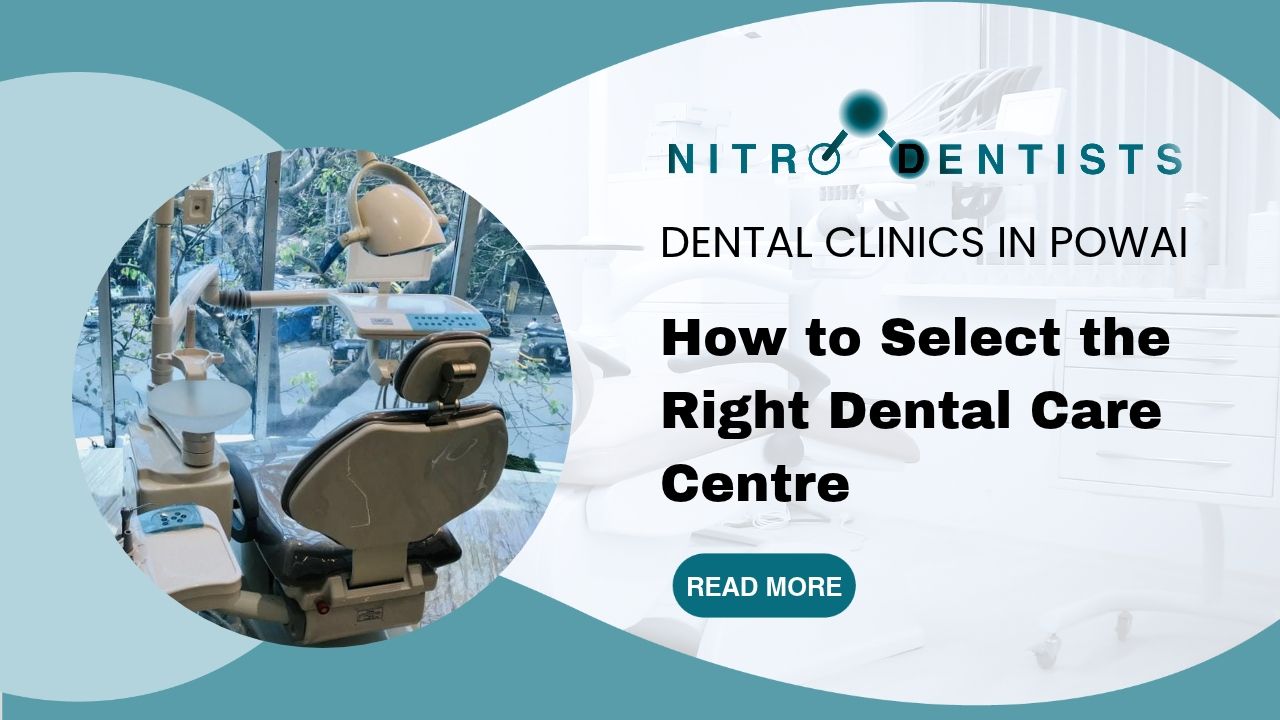
A Step-by-Step Approach for Powai Residents and Families
Powai has no shortage of dental clinics, from Hiranandani Gardens and Chandivali to the stretches near Kanjurmarg and Vikhroli. With so many options, the challenge is rarely finding a dentist; it is selecting a dental care centre that fits your needs, verifies its credentials, explains treatment honestly, and is practical to visit regularly.
This guide walks you through a simple selection process: defining what you need, checking registration and qualifications, matching clinic services to your situation, asking the right questions, and knowing what a good first visit looks like. If you want a deeper look at individual quality criteria such as sterilization and diagnostics, read our companion guide on how to choose the right dental clinic in Powai.
The Short Answer
Three Things That Matter Most When Selecting a Dental Clinic in Powai
If you only have a few minutes, focus on these three questions before booking your first appointment.
1. Verified Credentials
Is the dentist registered with the Maharashtra State Dental Council, and are specialist procedures handled by clinicians with relevant postgraduate (MDS) training?
See How We Present Our Team2. Services That Fit You
Does the clinic offer the care you and your family are likely to need, from routine cleanings to root canals, implants, aligners and support for dental anxiety?
Match Services to Your Needs3. Clear Communication
Does the dentist explain findings, discuss alternatives, and give you a written estimate before treatment, without pressure to decide on the spot?
Questions to Ask
The Selection Process
How to Select a Dental Care Centre in Powai: 5 Practical Steps
Choosing a dentist is easier when you approach it as a short process rather than a single decision based on proximity or online ratings alone. These steps help you shortlist and compare clinics objectively.
01
Define What You Need
Are you looking for a long-term family dentist, help with a specific problem such as a painful tooth or a missing tooth, or cosmetic improvements? A clinic that suits routine check-ups may not offer the specialist services required for implants, surgical extractions or orthodontics.
02
Verify Registration and Qualifications
Under the Dentists Act, 1948, practising dentists must be registered with their State Dental Council. Ask for the dentist's registration number and confirm who will actually perform your treatment, especially for specialist procedures.
03
Review Services, Hygiene and Diagnostics
Check whether the clinic provides the treatments you are likely to need, follows documented instrument sterilization, and uses digital X-rays only when clinically justified. In India, dental X-ray equipment falls under the regulatory oversight of the Atomic Energy Regulatory Board (AERB).
04
Consider Location, Hours and Emergency Access
Treatments such as root canals, aligners and implants require several visits. A centre that is easy to reach from your home or office, with evening or weekend availability and a clear process for urgent problems, makes it far more likely you will complete treatment and attend follow-ups.
05
Use the First Consultation to Decide
Your first appointment is the best way to evaluate a clinic. Notice whether the dentist takes a full medical history, examines thoroughly, explains findings in plain language, and lets you take time to consider your options.
Understanding BDS and MDS Qualifications
A Bachelor of Dental Surgery (BDS) is the qualification required to practise as a dentist in India. A Master of Dental Surgery (MDS) is a further three-year postgraduate specialisation in a branch recognised by the Dental Council of India. Knowing which specialty matches your concern helps you ask the right questions:
Conservative Dentistry & Endodontics
Fillings, complex root canal treatment and saving damaged natural teeth.
Prosthodontics
Crowns, bridges, dentures and restoring missing teeth, including implant-supported restorations.
Oral & Maxillofacial Surgery
Surgical extractions, wisdom teeth, implant surgery and jaw-related procedures.
Orthodontics
Braces, clear aligners and correction of bite and alignment problems.
Periodontology
Diagnosis and treatment of gum disease and the supporting structures of teeth.
Pediatric & Preventive Dentistry
Dental care for children, including preventive treatment and managing young patients' anxiety.
Match Your Needs
Which Type of Dental Care Centre Do You Need?
Different patients prioritise different things. Use this comparison to focus on the features that matter for your situation.
| If You Are… | What to Look For | Related Care in Powai |
|---|---|---|
| A family needing routine care | Preventive focus, individual check-up intervals based on risk, child-friendly communication and convenient hours for school and work schedules. | Teeth cleaning & polishing, tooth fillings |
| Dealing with tooth pain | Prompt appointments, diagnostic X-rays where needed, and a dentist who explains whether the tooth can be saved before recommending extraction. | Root canal treatment, crowns & bridges |
| Replacing missing teeth | Surgical and prosthodontic expertise, appropriate imaging for implant planning, and a discussion of alternatives such as bridges or dentures. | Dental implants, full mouth rehabilitation |
| Wanting straighter or brighter teeth | Orthodontic assessment before aligners, realistic previews of expected results, and conservative options that preserve natural tooth structure. | Braces & aligners, teeth whitening, smile designing |
| Anxious about dental visits | An unhurried approach, step-by-step explanations, and options such as Nitrous Oxide conscious sedation alongside local anaesthesia. | Nitrous Oxide sedation, overcoming dental fear |
| Needing wisdom tooth or surgical care | Oral surgery expertise, a pre-operative assessment of your medical history, and clear post-operative instructions and follow-up. | Dental extractions, oral & maxillofacial surgery |
A Family Needing Routine Care
Look For: Preventive focus, risk-based check-up intervals, child-friendly communication and convenient hours.
Related: Teeth cleaning & polishing, tooth fillings
Dealing with Tooth Pain
Look For: Prompt appointments, justified X-rays, and an explanation of whether the tooth can be saved.
Related: Root canal treatment, crowns & bridges
Replacing Missing Teeth
Look For: Surgical and prosthodontic expertise, implant planning imaging, and a discussion of alternatives.
Related: Dental implants, full mouth rehabilitation
Wanting Straighter or Brighter Teeth
Look For: Orthodontic assessment, realistic result previews, and conservative options.
Related: Braces & aligners, teeth whitening, smile designing
Anxious About Dental Visits
Look For: An unhurried approach, step-by-step explanations, and Nitrous Oxide sedation alongside local anaesthesia.
Related: Nitrous Oxide sedation, overcoming dental fear
Needing Wisdom Tooth or Surgical Care
Look For: Oral surgery expertise, a pre-operative medical review, and clear aftercare and follow-up.
Many families prefer a multi-specialty dental care centre so that routine care and more complex treatment can be coordinated in one place, with shared records and a single point of contact.
Be an Informed Patient
8 Questions to Ask a Powai Dental Clinic Before Starting Treatment
A good dental care centre welcomes questions. The answers you receive, and how they are explained, tell you a great deal about the clinic's approach to patient care.
Who will perform my treatment?
Ask for the dentist's name, qualifications and whether a specialist will be involved for procedures such as implants, surgical extractions or orthodontics.
What are all my treatment options?
For most dental problems there is more than one approach. You should hear the benefits, limitations and likely outcomes of each, including the option of monitoring where appropriate.
Can I have a written estimate?
An itemised estimate covering consultation, imaging, procedures, materials and follow-up visits helps you plan and avoids surprises later.
How many visits will this take?
Root canals, implants and aligners involve multiple appointments. Knowing the timeline helps you plan around work, travel and family commitments.
How are instruments sterilized?
Reputable clinics are open about their infection control, including cleaning, packaging and autoclave sterilization of reusable instruments in line with recognised guidance such as the CDC's.
Why do I need this X-ray?
X-rays are an important diagnostic tool, but they should be taken when they will inform your care. Your dentist should be able to explain the reason for each image.
What options are there if I feel anxious?
Ask how the clinic supports nervous patients, from explaining each step and agreeing a stop signal to sedation options where suitable.
What happens if I have a problem after treatment?
Find out who to contact for post-treatment concerns, how urgent issues are handled, and what follow-up appointments are included.
Warning Signs to Take Seriously
Be cautious if a clinic pressures you to start expensive treatment the same day without explaining why, cannot tell you who will treat you, avoids giving a written estimate, or promises guaranteed results. Dental outcomes depend on your biology, oral hygiene and habits, so honest dentists discuss realistic expectations rather than guarantees. When in doubt, it is reasonable to seek a second opinion.
Your First Appointment
What a Good First Consultation at a Powai Dental Clinic Should Include
Your first visit sets the foundation for all future care. Whether you are visiting for a check-up or a specific concern, a thorough consultation generally follows this sequence:
01
Medical and Dental History
Your dentist should ask about medical conditions, medications, allergies, pregnancy and previous dental experiences. Conditions such as diabetes, heart disease or the use of blood thinners can affect how dental treatment is planned.
02
Complete Oral Examination
A full examination covers your teeth, existing fillings and crowns, gums, bite and the soft tissues of your mouth, not just the tooth that is bothering you. Early signs of gum disease are often painless, so this step matters.
03
Diagnostic Imaging When Justified
Digital X-rays may be recommended to check for decay between teeth, infection at the root tip or bone levels. The type and number of images should be based on your clinical needs.
04
A Clear Explanation and Treatment Plan
You should leave understanding what was found, what is urgent and what can wait, the options available, and the estimated cost and number of visits. A good plan prioritises treating active disease before cosmetic work.
05
A Personalised Recall Interval
Rather than a fixed "every six months" rule, the NICE guideline on dental recall recommends intervals of 3 to 24 months for adults and 3 to 12 months for children, based on individual risk. Learn more in our guide on how often you should get a dental check-up.
If You Feel Nervous About Dental Visits
Dental anxiety is common and is a frequent reason people postpone care until a small problem becomes painful. Let the clinic know when you book. Nitrous Oxide ("laughing gas") conscious sedation helps you feel calm while you remain awake and able to respond. It does not replace local anaesthesia, which is still used to numb the treatment area, and your dentist will review your medical history to confirm it is suitable for you. For children, read whether kids can safely use nitrous oxide.
Learn About Nitrous Oxide SedationPlan Ahead for Dental Emergencies
Save your dental clinic's number before you need it. Severe toothache, facial swelling, a broken tooth or a knocked-out tooth should be assessed promptly. If a permanent tooth is knocked out, hold it by the crown, avoid touching the root, and either place it back in its socket or keep it in milk while you get to a dentist immediately. Facial swelling that affects breathing, swallowing or vision, or comes with high fever, needs urgent hospital care.
Read Our Dental Emergency Guide
Dental Care in Hiranandani Gardens
Nitro Dentist Powai: Our Dental Care Centre
If you are comparing dental clinics in Powai, here is how our Hiranandani Gardens clinic approaches the criteria covered in this guide. We encourage you to evaluate us using the same questions.
Powai (Hiranandani Gardens)
Address: 7th Floor, Unit No 701 & 702, El Tara Building, Hiranandani Gardens, Panchkutir Ganesh Nagar, Powai, Mumbai - 400076 (near NM Medical Powai)
Clinic Hours: Monday to Saturday, 10:00 AM - 8:00 PM. Sundays by prior appointment.
Access: Elevator access and nearby parking available.
“Pehle Calm, Phir Kaam”
Our clinical philosophy, “Pehle Calm, Phir Kaam” (Calm First, Work Second), means we prioritise your comfort and understanding before any procedure begins.
- Optional Nitrous Oxide conscious sedation for anxious patients, used alongside local anaesthesia.
- Class-B vacuum autoclave sterilization of reusable instruments, verified with chemical indicators.
- Low-dose digital radiography and intraoral cameras to support diagnosis and help you see what we see.
- Access to MDS specialists from the Nitro Dentists clinical network for dental implants, root canal treatment, clear aligners and oral surgery.
Sources & Standards
References Used in This Guide
The guidance in this article is based on the following regulatory frameworks and clinical guidelines:
Registration & Qualifications
The Dentists Act, 1948, governing registration with State Dental Councils, and Dental Council of India (DCI) regulations on recognised MDS specialties.
Radiation Safety
Atomic Energy Regulatory Board (AERB) requirements for medical diagnostic X-ray equipment, including dental units.
Check-Up Intervals
NICE Clinical Guideline CG19, "Dental checks: intervals between oral health reviews".
Infection Control & Dental Trauma
CDC Summary of Infection Prevention Practices in Dental Settings, and International Association of Dental Traumatology (IADT) guidelines.
Frequently Asked Questions
Common Questions About Choosing a Dental Clinic in Powai
Straightforward answers to help you select a dental care centre with confidence.
Under the Dentists Act, 1948, every practising dentist in India must be registered with the State Dental Council of the state where they practise. In Mumbai, that is the Maharashtra State Dental Council. You can ask the clinic for the dentist's registration number, which is commonly displayed in the clinic, and confirm their qualifications (BDS, and MDS for specialists) during your consultation.
A general dentist holds a Bachelor of Dental Surgery (BDS) and manages most routine care, including check-ups, cleanings, fillings and many root canals. A specialist has completed a further three-year Master of Dental Surgery (MDS) in a specific branch recognised by the Dental Council of India, such as Conservative Dentistry & Endodontics, Orthodontics, Prosthodontics, Periodontology, Pediatric Dentistry or Oral & Maxillofacial Surgery. Complex cases such as surgical extractions, implants or orthodontic correction often benefit from specialist involvement.
There is no single interval that suits everyone. The NICE guideline on dental recall recommends that intervals for adults range from 3 to 24 months, and for children under 18 from 3 to 12 months, based on each person's individual risk of decay and gum disease. Your dentist should recommend an interval after examining you, rather than applying a fixed schedule.
A thorough first visit usually includes a review of your medical history and medications, a full examination of your teeth, gums, bite and soft tissues, X-rays only where clinically justified, and a clear explanation of findings. If treatment is needed, you should receive the options available, their benefits and limitations, the expected number of visits and an estimate of costs before you agree to proceed.
Severe toothache, facial swelling, bleeding that does not stop, and a broken or knocked-out tooth should be assessed promptly. If a permanent tooth is knocked out, hold it by the crown, avoid touching the root, and either place it back in its socket or store it in milk while you get to a dentist immediately. Facial swelling that affects breathing, swallowing or vision, or is accompanied by high fever, needs urgent hospital care.
Yes. Many clinics now offer anxiety-conscious care, and some provide Nitrous Oxide (laughing gas) conscious sedation. Nitrous oxide helps you feel relaxed while you remain awake and responsive; it does not replace local anaesthesia, which is still used to numb the area being treated. Your dentist will review your medical history to confirm it is suitable for you.
Nitro Dentist Powai is located on the 7th Floor, Unit No 701 & 702, El Tara Building, Hiranandani Gardens, Panchkutir Ganesh Nagar, Powai, Mumbai - 400076 (near NM Medical Powai). The clinic is open Monday through Saturday from 10:00 AM to 8:00 PM, and on Sundays by prior appointment. Appointments can be booked by calling +91 81081 44004 or online.
Clinical & Medical Review
Reviewed by the Nitro Dentists Clinical Team
This guide was reviewed by Dr. Parth Shah (BDS, MDS - Oral & Maxillofacial Surgery) and Dr. Nidhi Choudhary (BDS, Preceptorship in Endodontics, Boston University) in accordance with Dental Council of India (DCI) professional standards. It is intended for general information and does not replace an individual dental examination.
Looking for a Dental Care Centre in Powai?
Book a consultation at Nitro Dentist, Hiranandani Gardens. Ask us every question in this guide, and we will walk you through your examination findings and treatment options before anything begins.